Logical-Scientific Basis In Andean Communities Around Quechua Vertical Birth

Authors

Lucy Orellana de Piscoya
Universidad Nacional de San Cristóbal de Huamanga
https://orcid.org/0000-0002-5948-8288
María Luisa León Mendoza
Universidad Nacional de San Cristóbal de Huamanga
https://orcid.org/0000-0002-9351-5905
Melchora Jacqueline Avalos Mamani
Universidad Nacional de San Cristóbal de Huamanga
https://orcid.org/0000-0003-3293-3502
Luis Alex Alzamora De Los Godos Urcia
Pontificia Universidad Católica del Perú
https://orcid.org/0000-0003-1315-102X

Keywords:

Vertical birth, ethnography, indigenous philosophy, spirituality, midwives

Synopsis

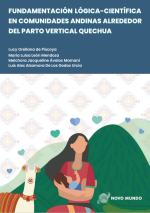
The book develops the topic of Quechua vertical childbirth, due to this it is explained, in the first instance, on Andean philosophical and epistemic principles and Andean worldview; Likewise, it is detailed on the endocrinological bases of Andean vertical childbirth, detailing childbirth, oxytocin and the traditions of the Andes. On the other hand, it is exposed on the psychological and spiritual bases of the vertical birth explaining the indigenous philosophy and on the midwives. In relation to this, a study was carried out with the objective of knowing the logic of Quechua vertical birth from the historical/cultural, philosophical, endocrinological, anatomical/physiological, psychological foundations, in the rural communities of Ayacucho.
In the analysis, the bases of vertical childbirth were evidenced, where the historical/cultural, philosophical, endocrinological, anatomical/physiological and psychological foundations of childbirth were explained; The conclusions determined that, despite the time, Andean knowledge and practices on Quechua vertical childbirth still survive.
Author Biographies

Lucy Orellana de Piscoya, Universidad Nacional de San Cristóbal de Huamanga

Obstetrician with a Doctorate in Public Health, Professor of Public Health at the Faculty of Health Sciences of the National University of San Cristóbal de Huamanga – Ayacucho- PERU. She has been carrying out field work and research for more than 30 years in Traditional Medicine, Indigenous Midwifery, Interculturality in Health. Purpose: recognize, validate Andean knowledge.

María Luisa León Mendoza, Universidad Nacional de San Cristóbal de Huamanga

Obstetrician by profession with a Doctorate in Public Health, professor, with more than 30 years of experience in the academic area of Obstetrics at the Faculty of Health Sciences of the National University of San Cristóbal de Huamanga – Ayacucho – PERU. She has a track record in research work in sexual and reproductive health.

Melchora Jacqueline Avalos Mamani, Universidad Nacional de San Cristóbal de Huamanga

Obstetrician by profession, with a Doctorate in Education, professor, with more than 30 years of experience in the academic area of Anatomy and Physiology at the Faculty of Health Sciences of the National University of San Cristóbal de Huamanga – Ayacucho – PERU. With experience in research work in sexual and reproductive health

Luis Alex Alzamora De Los Godos Urcia, Pontificia Universidad Católica del Perú

Ph. D. (University of Miami), current professor in Postdocs and doctorates in scientific research courses at various Universities in the country, such as the Pontifical Catholic University of Peru, the Universidad Nacional Mayor de San Marcos, the Ricardo Palma University, the Universidad Enrique Guzmán y Valle (La Cantuta) and the Federico Villareal National University. He has been a research consultant for USAID, a consultant for the Royal Netherlands Embassy and the European Union for Inppares and Kalpa projects.

Downloads

Published

July 13, 2023