
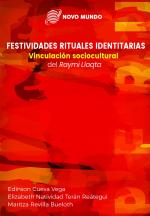
IDENTITY RITUAL FESTIVITIES: Sociocultural linkage of Raymi Llaqta
Keywords:
festivity, ritual, identity, link, Raymi LlaqtaSynopsis
The diversity of cultural expressions in Peru is infinite. Among this set, the ritual festivity stands out with its own authenticity, providing in its complex reflective corpus the content of solemnity and hope that distinguishes it from other forms of celebration.
The use of ritual puts into practice the value of the intangible assets and the cultural heritage that each nation preserves together with the collective capacity to protect their generational ties, making it a safe place for the protection of identities and stories of each town.
The cultural manifestations remain deeply linked to the symbolic forms that allow the approach of their daily practices with the essence of their collective spirit. And it is precisely in the careful approach to their taxonomy that the reinvention routes that have enabled them to create propitious scenarios for new ways of interpreting their relationships and ways of being are clarified.
Bindingly, both the social and the cultural are part of the same structure, both being inseparable, differentiated but constitutive of each other. In the sphere that closes them, the fact of living in community is transformed into a kind of ritual, managing habits in procedures for memory and with a view to generational practice.
The importance of thinking of festivities as sociocultural universes encourages the possibility of positioning the ludic in an autonomous category to show other ways of collectively building. Also approaching categories still to be explored in the dimension that the celebration of the festivity implies.
The Raymi Llaqta is a clear example of this cultural power, in whose realization the celebration of the collective is consolidated, of the diversity that flourishes in the same space. Its significance goes far beyond being a cultural parade or an institutional tourist event. This represents a regional integration festival that mobilizes a strong identity charge of transcendent importance for the recognition of all the communities of the Peruvian Northeast, the same ones that find in this celebration one more reason for their self-affirmation, to reinforce their identity and build their own future through from a creative community.
The sociocultural impact generated by its implementation and the fact that each time it generates a broader call provides a platform full of valuable human, synthetic and syncretic variety to provide socializing representations that narrow the culturally different community human groups that coexist in the Amazon region. The bond that strengthens this ritual encounter becomes an integrating response that in its development manages to unify different ways in how life is expressed for each one of them.
The language of the ritual festival links multiple forms of social action in community. The mobility of the signs and temporal meanings in which this intangible cultural heritage develops implies that this symbolic work can only be developed collectively and autonomously. Developing in its journey, the substantial collective value that promotes the construction of regional history, the consolidation of living culture and the significance of cultural memory for future generations.


 Cdla Los Esteros Mz 5 A Villa 22, Guayaquil, Ecuador
 contacto@editorialnovomundo.com